
My premise is that we live in a world where truth seems undefined or at least debatable. 1 Peter helps us to understand how we think about ourselves and our relationship to God so that we can move ourselves towards right thinking. That will help us understand what is true and what is not.
The news today is carrying the tragic stories out of Gaza, Ukraine, Haiti…and there are other places where suffering is a common experience. Maybe you know someone who is suffering – they have a disease or a job has been lost and finances are very tight. Suffering because of the loss of a child, or the loss of a parent… or caught in the foster child system… I think there are plenty of examples of suffering. Suffering is not an uncommon experience for the human experience.
How would you describe suffering? When is suffering just inconvenience? When you think of suffering what comes to mind?
The current debate over Medical Assistance in Dying (MAiD) tells me there are many people who suffer – some in silence.
Peter reminds his readers that Christ is the model of suffering and His suffering was for us.
21 To this you were called, because Christ suffered for you, leaving you an example, that you should follow in his steps. 22 “He committed no sin, and no deceit was found in his mouth.” 23 When they hurled their insults at him, he did not retaliate; when he suffered, he made no threats. Instead, he entrusted himself to him who judges justly. 24 “He himself bore our sins” in his body on the cross, so that we might die to sins and live for righteousness; “by his wounds you have been healed.” (Chapter 2)
12 Dear friends, do not be surprised at the fiery ordeal that has come on you to test you, as though something strange were happening to you. 13 But rejoice inasmuch as you participate in the sufferings of Christ, so that you may be overjoyed when his glory is revealed. 14 If you are insulted because of the name of Christ, you are blessed, for the Spirit of glory and of God rests on you. 15 If you suffer, it should not be as a murderer or thief or any other kind of criminal, or even as a meddler. 16 However, if you suffer as a Christian, do not be ashamed, but praise God that you bear that name. (Chapter 4)
What do we do when we suffer? How do we think when we suffer? We are considering how we might move toward right thinking and part of that must be how do we identify ourselves in our suffering. We might ask, is suffering a virtue? The Bible talks about the gift of martyrdom – not a gift most of us would desire.
Most of the Bible speaks to us but the Psalms speak for us. So let’s list a few verses that illustrate this when we think of suffering.
Psalm 4:1 “Answer me when I call to you, my righteous God.
Give me relief from my distress; have mercy on me and hear my prayer.
Psalm 10:1 “Why, Lord, do you stand far off? Why do you hide yourself in times of trouble?”
Psalm 13:1,2 “How long, Lord? Will you forget me forever? How long will you hide your face from me? 2 How long must I wrestle with my thoughts and day after day have sorrow in my heart?”
Pslam 22:1 “My God, my God, why have you forsaken me?”
We have lived in a world of peace and prosperity – an anomaly in the history of mankind. We’ve enjoyed vaccines, economic prosperity, advanced medical treatments, advancing technology, large houses and availability to fresh food no matter the season.
Some preachers have used our experience to create a theology called “the prosperity gospel”. No capital G on gospel…for this is a perversion of what the Bible speaks of.
Here is what the writer of Ecclesiastes says:
There is a time for everything,
and a season for every activity under the heavens:
2 a time to be born and a time to die,
a time to plant and a time to uproot,
3 a time to kill and a time to heal,
a time to tear down and a time to build,
4 a time to weep and a time to laugh,
a time to mourn and a time to dance,
5 a time to scatter stones and a time to gather them,
a time to embrace and a time to refrain from embracing,
6 a time to search and a time to give up,
a time to keep and a time to throw away,
7 a time to tear and a time to mend,
a time to be silent and a time to speak,
8 a time to love and a time to hate,
a time for war and a time for peace.
Our question or premise that we need to learn to think correctly about who we are addresses the topic of suffering. If we see ourselves as being in God’s hand – a chosen priesthood, a royal nation, a child of God, a citizen of the Kingdom of God, then we are reminded that no matter what happens to us we ARE His child. We are not deserted though, like Jesus, we might call out “why have you forsaken me?”.
Jesus said, “I have told you these things, so that in me you may have peace. In this world you will have trouble. But take heart! I have overcome the world.” (John 16:33)
In this world you WILL have trouble. Not too assuring is it? But then He goes on to say, but you can have peace through me.
So what is the antidote to suffering? Well, I think I find my answer here:
“…remember that at that time you were separate from Christ, excluded from citizenship in Israel and foreigners to the covenants of the promise, without hope and without God in the world. 13 But now in Christ Jesus you who once were far away have been brought near by the blood of Christ.” (Ephesians 2)
And back to our author Peter:
“But in your hearts revere Christ as Lord. Always be prepared to give an answer to everyone who asks you to give the reason for the hope that you have.” (1 Peter 3:15)
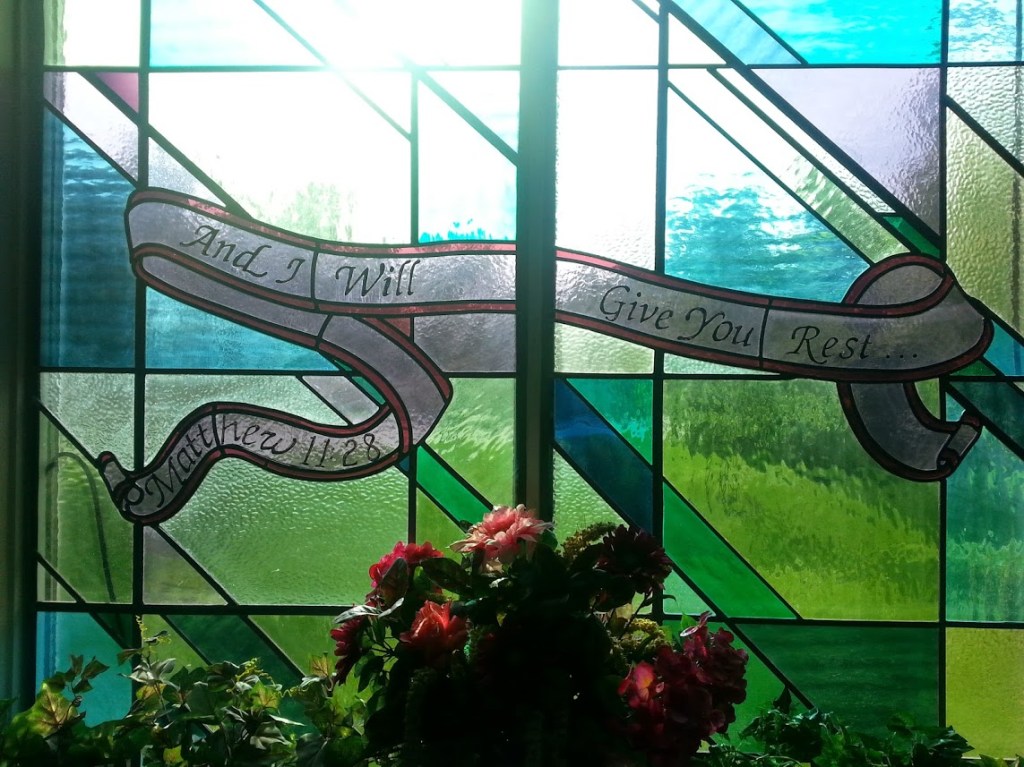
Yes, hope is the antidote to suffering and our hope is not a passing one or a conditional one. Christ gives us hope every day – good or bad.
 Hybrid Thoughts