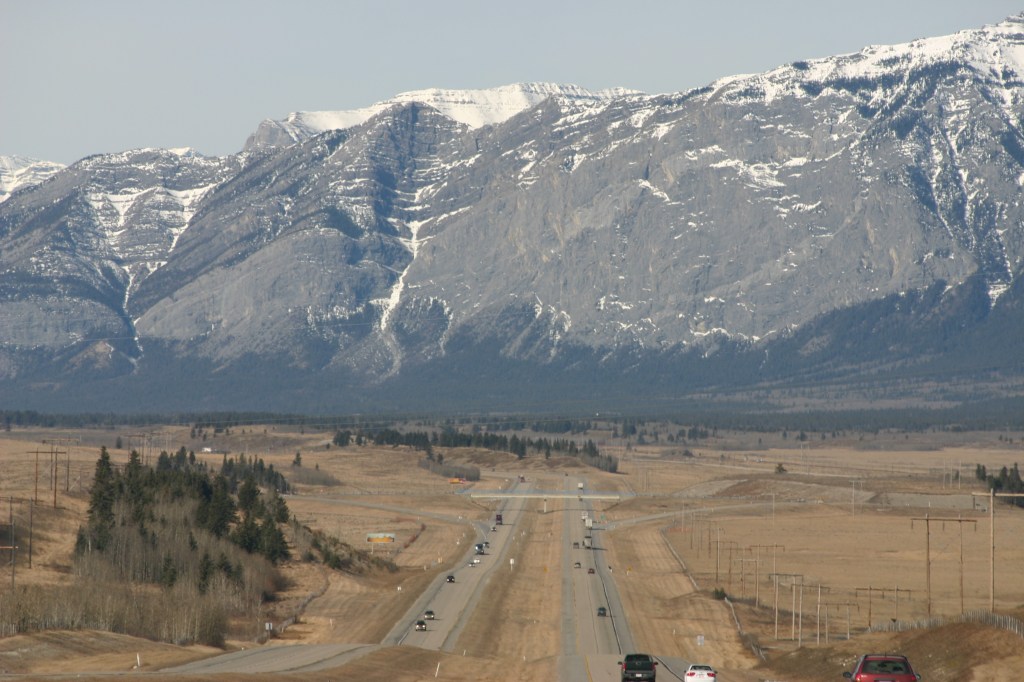
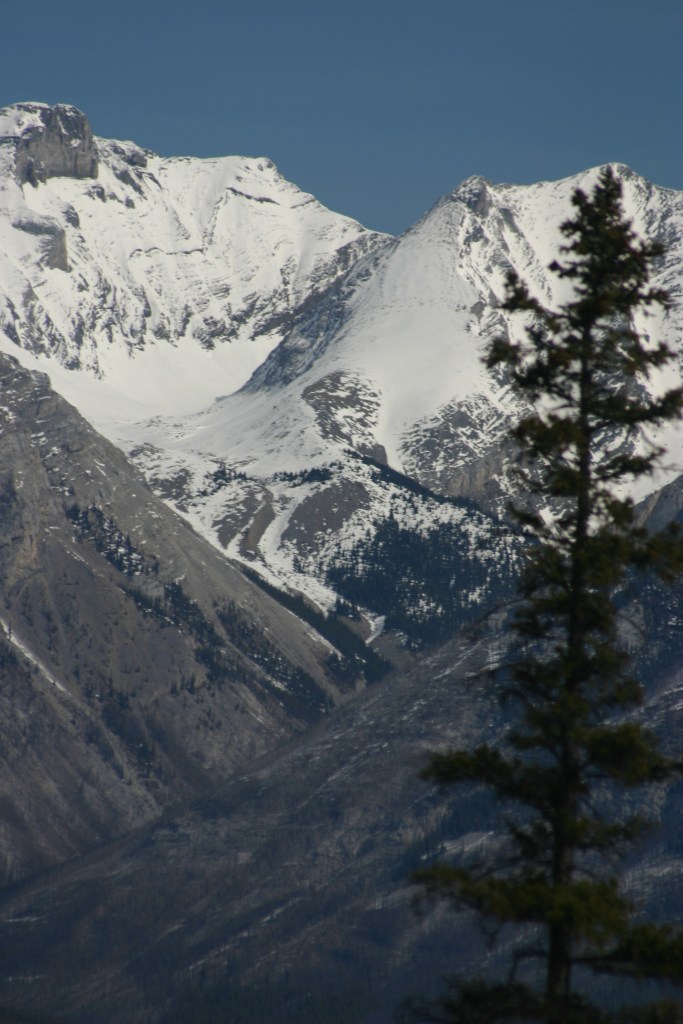
I love how a telephoto lens can flatten a picture, as this one does. This is a photograph I took in 2006, early spring, looking west along the trans-Canada highway as we approached the mountains. Calgary is said to be set in the foothills, and you get the sense of rolling hills as you drive from east to west.
In case you wondered – these are all my photos.
If you’ve never been to this part of the country you do get a sense that the mountains rise up suddenly to meet you and the road of course swings to follow the valley between the mountain ranges.
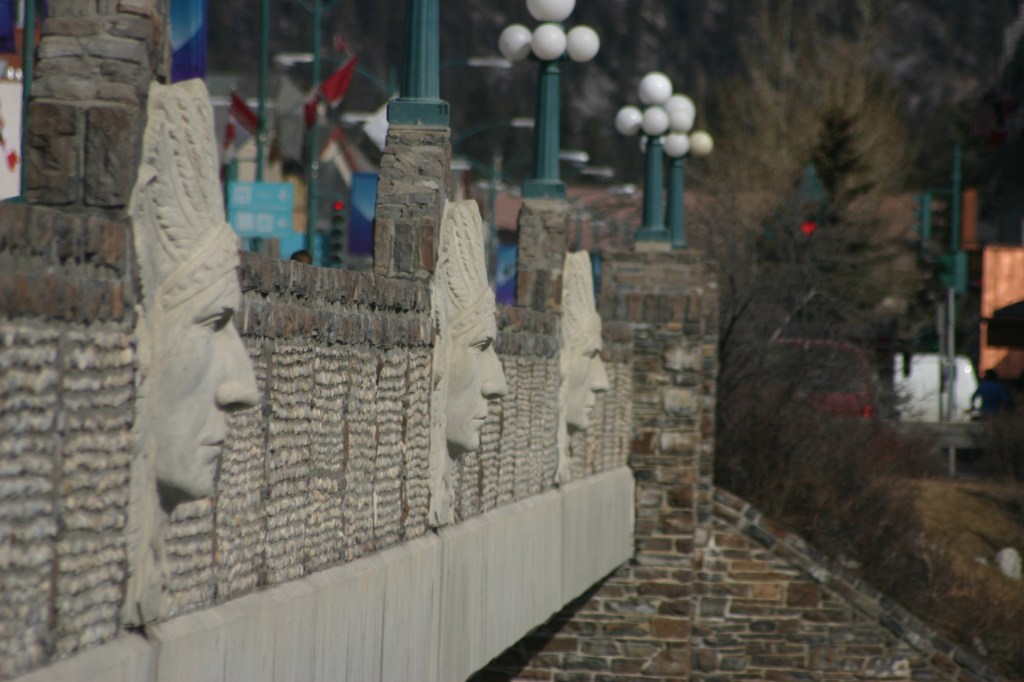
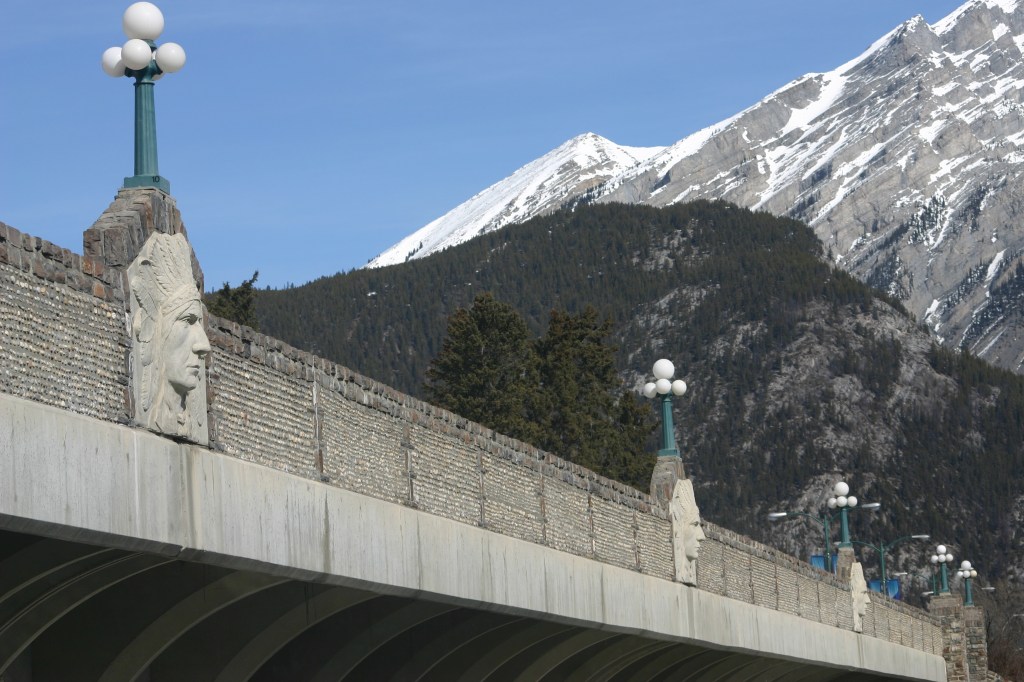
The bridge crossing the Bow River, running through Banff, has these indigenous faces profiled along the outer side of the bridge.
The Stoney Nakoda are the First Nations people most associated with Banff National Park. They were removed from the mountain areas and restricted from hunting animals and gathering plants soon after the park was created in 1885.
From the town of Banff’s website:
“In 1919, residents in the growing townsite of Banff were invited to a community meeting to discuss the fate of the Bow River Bridge. The single-lane iron truss bridge connecting Banff Avenue to the Brett Sanitorium dated back to 1887, when the new Park Superintendent George Stewart had commissioned the town’s first permanent bridge to transport visitors from the train station to the Cave and Basin Hot Springs and the Banff Springs Hotel. By the 1910s, when automobiles were first allowed in the park, the bridge was considered “unsightly and dangerous”, and plans were underway to replace it. Park administrators commissioned City Beautiful town planner Thomas Mawson to design a plan for the townsite’s redevelopment, complete with drawings for a grand bridge to replace the original, but in the summer of 1914 war broke out in Europe, and the project was put on hold.
When the bridge issue was revisited in 1919, Banff residents overwhelmingly supported its replacement with a concrete option, modeled after Mawson’s drawings from 1914. The Crag and Canyon reported: “The proposed concrete bridge has a 50 ft. roadway and two nine ft. walks, with elliptical arches, concrete balustrades, piers and abutments properly proportioned and presenting a symmetrical graceful whole, in entire harmony with its magnificent setting. The citizens of Banff and the broad dominion could take pride in such a bridge, and it would be an additional object of interest to tourists.”
The bridge was built between 1920 and 1921, providing employment and a welcome payroll for many Banff residents through the winter months. The final plans featured a slightly reduced 36 ft. roadway, stone facing on the steel and concrete for the appearance of a solid stone bridge, and six concrete-cast reliefs of an unknown First Nations man, designed by the sculptor also responsible for the lions cast on Calgary’s Centre Street Bridge.”
While the density of tourists keeps Banff economically afloat, I’m sorry it has lost some of the charm of this little mountain town.
Mind you, you don’t have to go far from the town site to find yourself feeling the wilderness that surrounds the town. And of course you will see wildlife about the town depending on the time of day and season.
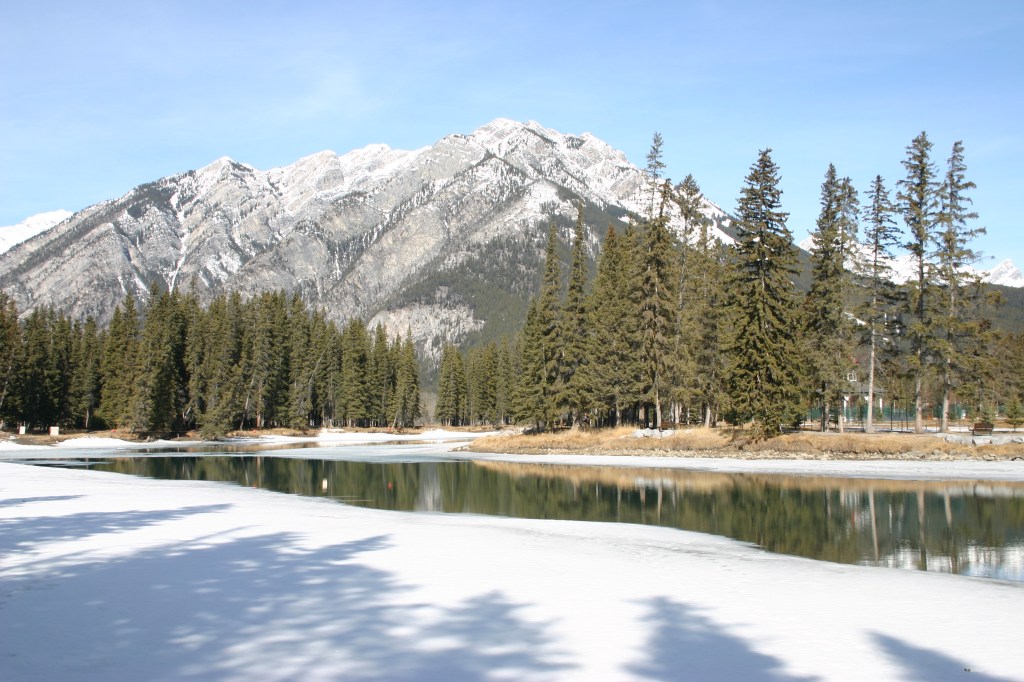
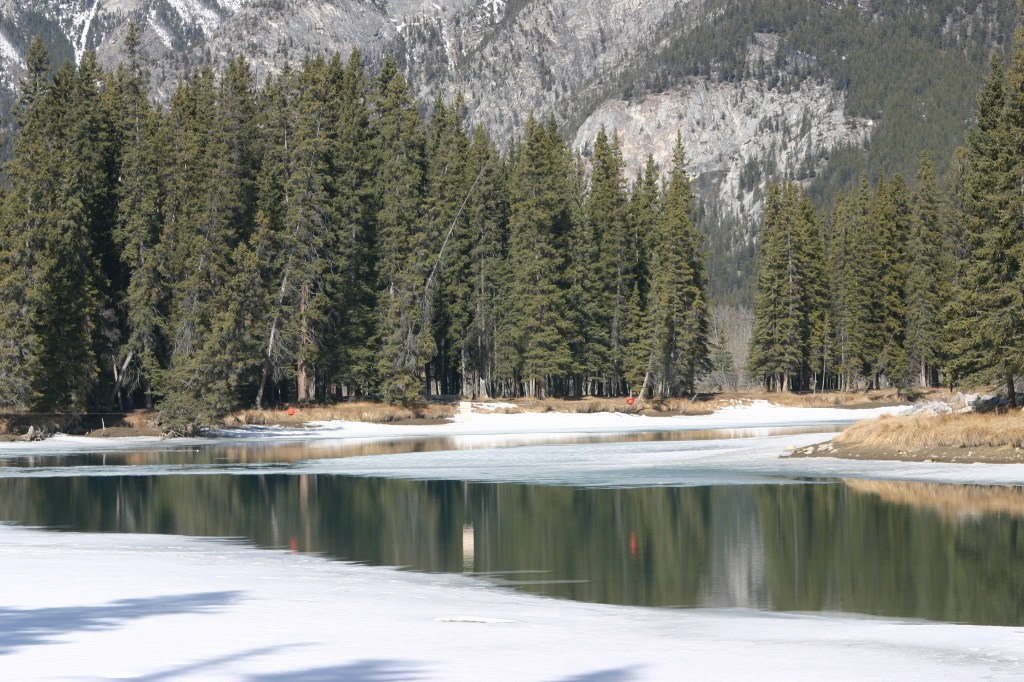
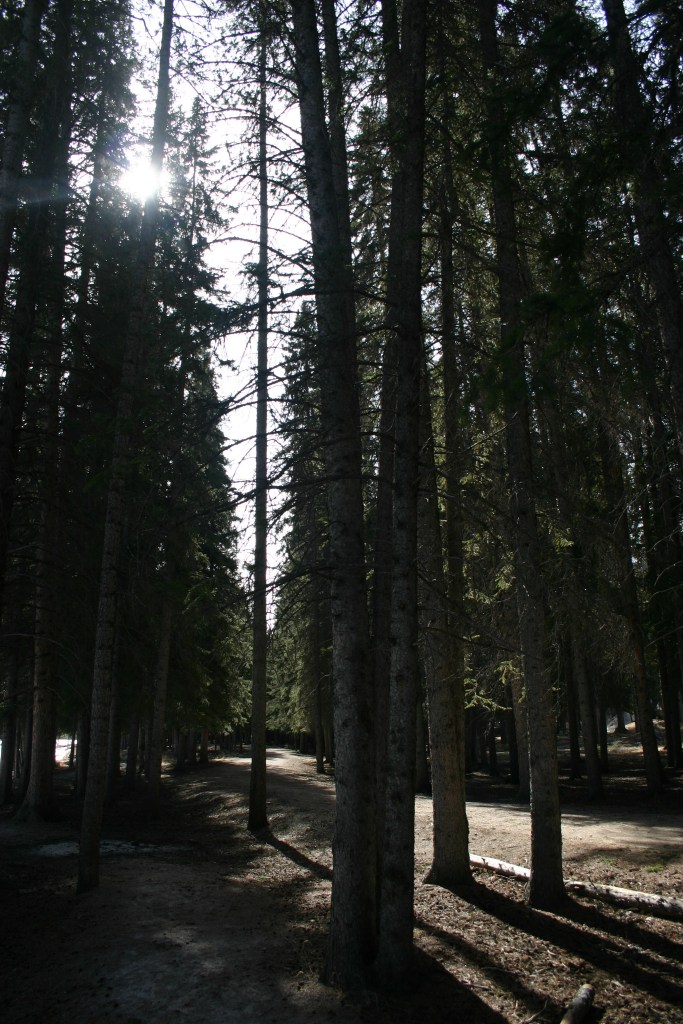
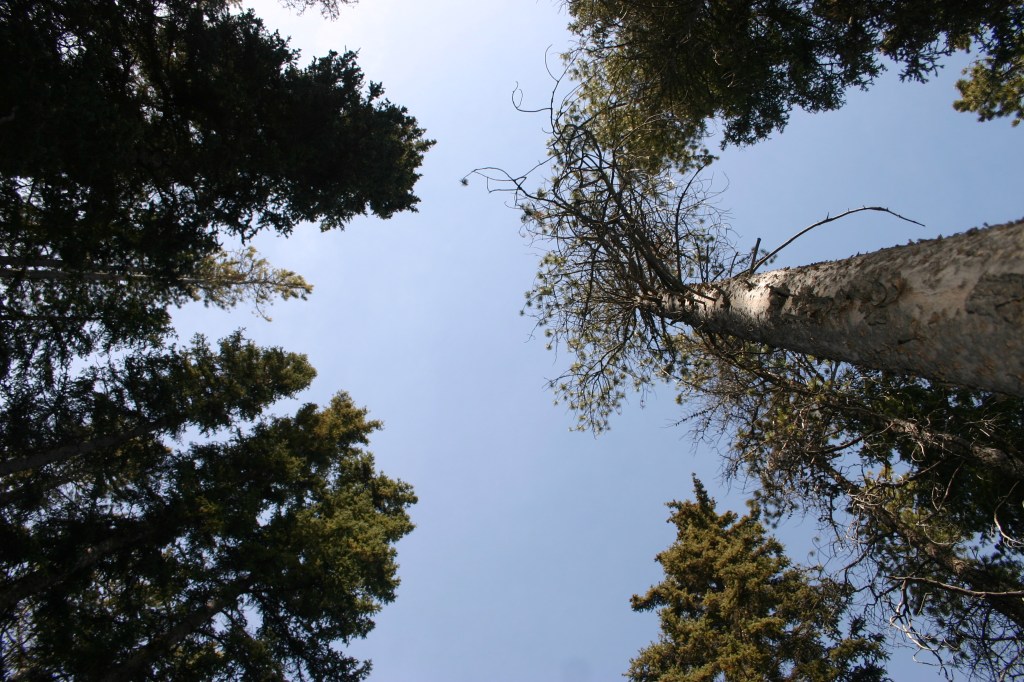
Alberta is a beautiful province and we enjoy living here.
 Hybrid Thoughts